By: medekomadmin
Understanding Simulation in Nursing Education
April 29, 2026
Introduction
Why simulation in nursing education matters: Because nursing is more than reading from a textbook, nursing students need to acquire great hands-on experience in order to become great nurses. Teaching nursing students to make decisions quickly in a simulation setting is key because many of these situations rarely occur and can be hazardous to both patients and students. Simulation in nursing education allows a controlled environment for individuals to go through all of the steps they would take in a real-world scenario.What is simulation in nursing education?
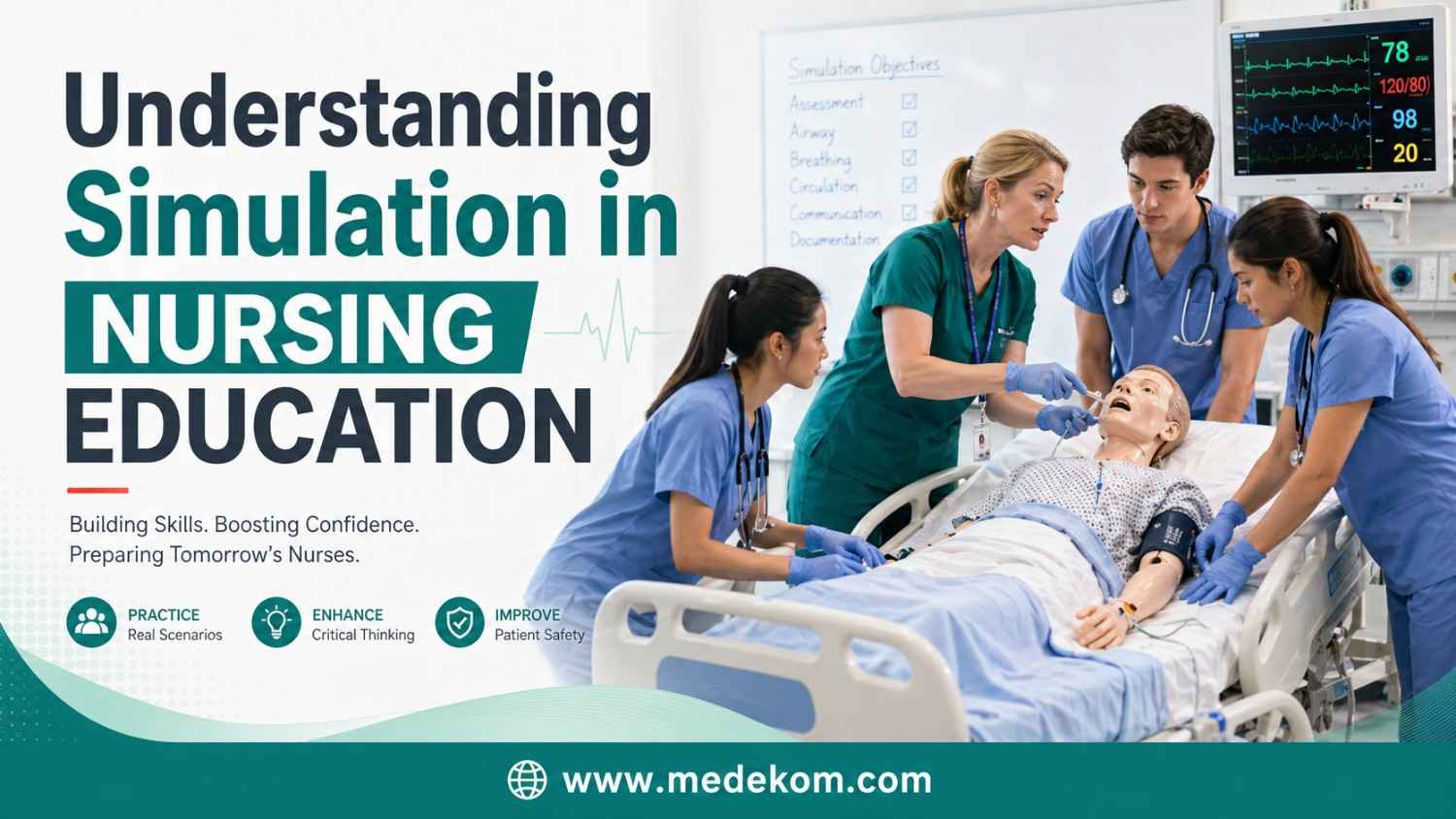
Simulation in nursing education is a training method where students learn and practise using medical dummies. Simulation tools can represent different patient conditions. It helps students to learn the timing, communication, critical thinking and technical safety standards necessary for real-world patient care. For example, when a patient's heart stops beating and there is no time to read a textbook. In simulation labs students are trained to learn these kinds of scenarios by practising the following: Immediate CPR Action: Students learn how to recognise signs of a cardiac arrest and, through class, learn how to provide effective, life-saving chest compressions. Students practise with mannequins and gain the physical memory to provide immediate CPR when it’s needed most. In addition to practising in a safe, controlled environment, students learn the value of teamwork and quickly assume roles, including initiating the Code Blue, retrieving supplies, and beginning ventilation and chest compressions to ensure each step of the cardiac arrest chain of action is completed. One of the key components of our Mastering Equipment course is training on how and when to use a defibrillator/AED (Automated External Defibrillator). During our simulation sessions, students not only learn the basic concepts and steps involved in using a defibrillator but also apply the training and learn exactly when and how to deliver a shock in real-life situations. This allows students to not only develop theoretical knowledge of defibrillator use but also practical confidence and competence in treating individuals experiencing sudden cardiac arrest.
Importance of Simulation in Nursing Education
The two major components of simulation are pre-briefing and debriefing. Through a prebrief, a facilitator explains the purpose and learning objective of the simulation scenario. Debriefing, on the other hand, helps participants to reflect upon the patient care performed during the scenario. as it helps to enhance the learning experience of the participants and, hence, improve critical thinking. Simulation-based learning has a very important role in preparing the nursing students for real-life clinical situations. There is an analysis in clinical nursing education that also highlights how simulation-based learning helps students to implement their theoretical knowledge with clinical skills in a safe and structured environment. Simulation in nursing education allows students to master complex procedures through repeated practice in safe environments. Considerably, it builds technical and professional competence. Simulation prioritises patient safety by providing a risk-free environment and allowing students to make mistakes and learn from them before interacting with real patients.Some key reasons why simulation is important include:
- Professional Confidence: Combining theory with practical application using manikins, patient simulators and a series of simulation situations developed to recreate clinical reality, the course project helps to generate professional confidence.
- Strengthened Team Dynamics & Effective Communication: Simulation models in nursing education provide students with a meaningful experience in learning about the value of effective teamwork and strengthened communication amongst healthcare providers while practising effective patient interaction and process education as well as understanding SBAR (situation, background, assessment, and recommendation).
- Better emergency alertness: It helps students to prepare for emergencies such as cardiac arrest, trauma, shock or sudden changes in patient health. Through the realistic training scenarios, students get to know how to handle the situation quickly and make the right decision by critical thinking.
- Improved clinical decision-making skills by having the student centre their practice on the patient’s needs and allowing them to make decisions and take action with independence and confidence while applying theoretical knowledge.
- Better Practical Skill Development: Simulation allows repeated practice of clinical skills on medical dummies to help develop practical medical skills in a safe environment.
Types of Simulation Used in Nursing Education
Simulation models in nursing education are selected depending on the objectives of the training. By choosing the proper model, different educational goals can be achieved and learners supported more effectively.- Task trainers are dedicated medical training models that are programmed to aid in the practice of specific skills such as intravenous (IV) procedures, injections, urinary catheterisation and wound dressing.
- Low-Fidelity Manikins: These simulation models are generally used for initial training programmes and provide learners with valuable experience in patient care skills such as safe placement and positioning of patients, standard CPR techniques and other standard nursing procedures.
- High-fidelity patient simulators allow students to engage in real-life clinical situations, and the simulators physiologically behave, breathe, pulse, make heart sounds, speak and change health status.
- Scenario-based simulation: Our simulators enable learning of clinical skills and decision-making in various scenarios, including critical situations. Scenario-based simulation at Ukami acts like it's in a real hospital setting. Trained actors and/or manikins/task trainers can be combined with standard or customised ones.
- Hybrid simulation scenarios to support hybrid simulation in nursing. This educational method to improve clinical skills, confidence and effective communication with patients can incorporate a variety of wearable technologies to replicate patient simulation scenarios such as giving medication, bleeding or pain.
- Standardised Patient Simulation: Standardised patient (SP) simulation uses trained actors to create realistic, repeatable clinical scenarios where nursing students can practise safely. It strengthens communication, critical thinking, and confidence, often leading to better outcomes than traditional methods. SPs are used in teaching and assessments like OSCEs, offering high realism, immediate feedback, and a safe space to build skills such as history-taking, clinical judgement, and patient interaction even in sensitive situations like mental health or end-of-life care.
Conclusion
Simulation-based learning is transforming nursing education worldwide and helps students to learn more in a better way by converting their theoretical knowledge into practical skills. Simulation training provides a safe environment for students to learn and improve their clinical skills through real-life scenarios and learn to get the exact same situation as in the hospital. By adopting advanced teaching methods in healthcare sectors using medical dummy manikins, nursing institutions can improve the quality of healthcare education in the country. This not only supports better learning but also a stronger future for the medical field by preparing skilled, confident, and patient-ready healthcare professionals. Are you looking to strengthen your nursing simulation? Explore Medekom’s range of medical training manikins and simulators designed to support practical learning, skill development, and safer patient care training.Written by
Sonali Bhandari