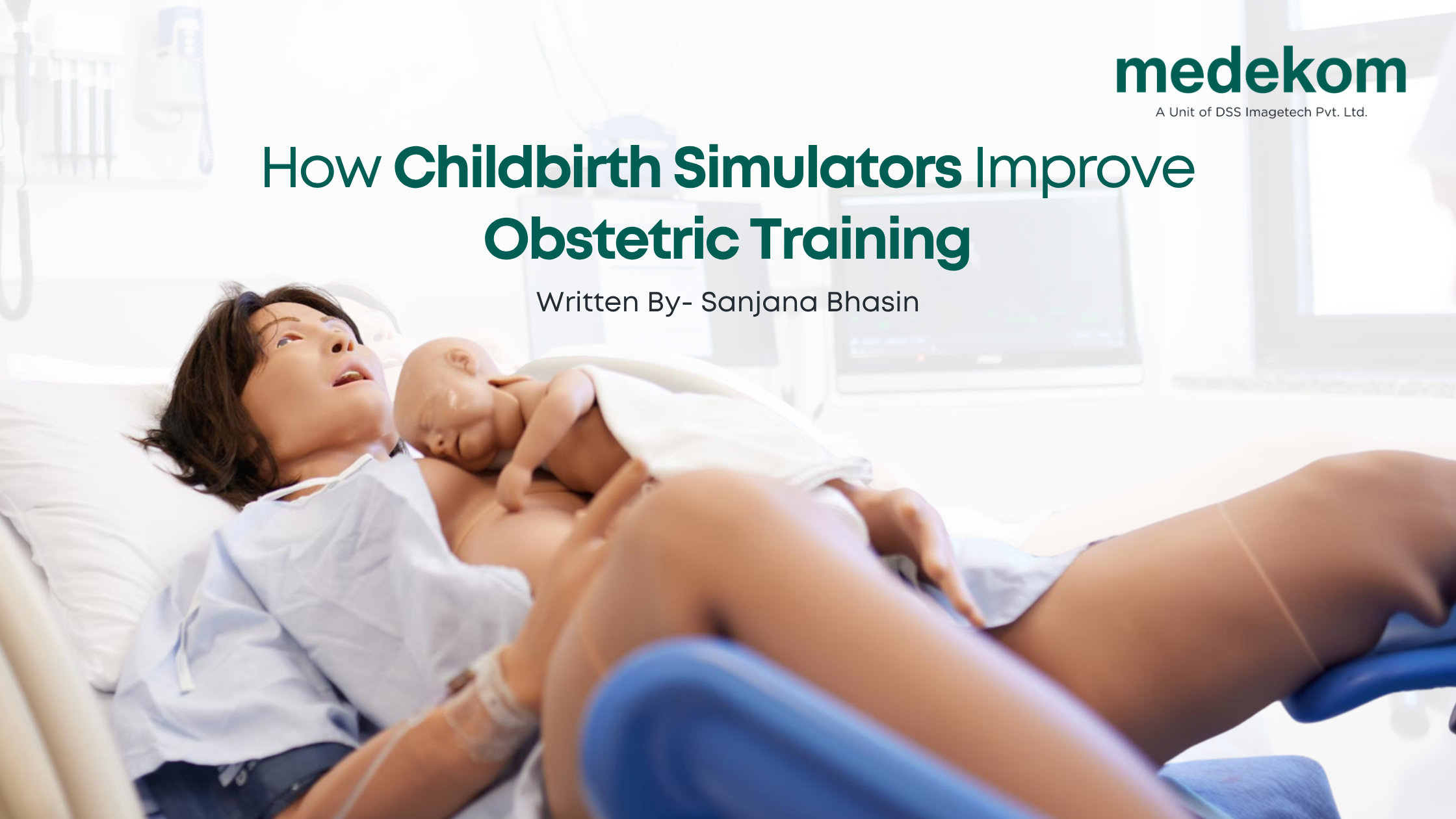
Childbirth is a significant moment in maternal & newborn care , but sometimes unexpected complications occur that require immediate medical attention for which healthcare professionals need to be well trained to manage such complicated conditions . Traditionally , obstetric training involves theoretical knowledge , classroom teaching & clinical exposure to practice clinical skills in hospitals but this doesn’t provide sufficient opportunities to students . This is where
becomes important.
Obstetric simulation is a type of training method that recreates different stages of pregnancy , labour , delivery , and postpartum care in a controlled environment , so that healthcare professionals can practise clinical procedures , complications and proper decision making in stressful situations without risking actual patients.
Challenges in Traditional Obstetrics education
Traditional obstetric education includes classroom teaching , textbooks , clinical demonstrations & clinical practice at hospitals under supervision . These methods are crucial to build up a strong foundation but it also has some limitations such as limited exposure to high risk deliveries and emergency situations . During clinical postings not everyone gets the opportunity to face critical conditions , even if they get the chances to participate in it is very less . During the training period of healthcare personnels occurrence of such complications Shoulder Dystocia , Cord Prolapse , Antepartum Haemorrhage , Postpartum Haemorrhage are very less so they just have theoretical knowledge but no exposure about managing the patients . Real clinical situations involve time management , patient safety & emotional pressure . Skill training can't be done on critical patients by risking their lives . Simulation based learning bridges the gap between theory and practice.
What is a Childbirth Simulator and How does it work?
A
Childbirth Simulator is a specialized obstetric manikin designed to recreate different scenarios of pregnancy , delivery , labour and postpartum care along with the complications to provide realistic experience and to improve clinical skills , team briefing , time management in a controlled environment. Childbirth simulators comprises maternal manikin , fetal manikin & integrated patient monitoring system . Based on the models of simulators, an obstetric manikin simulates maternal anatomy and physiology , fetal heart rate , cardiotocography , fetal movements , uterine contractions.
For instance , a trainer can recreate a scenario on normal delivery and learners can observe fetal sounds , fetal movements , progression of labour based on simulators physiological model , even can practise all the complications in real time by which all the theoretical knowledge can be applied in clinical practise .
How Childbirth Simulator helps Healthcare Professionals
Childbirth Simulators play a key role in simulation based learning in medical education as it provides opportunity for learners to learn from practical experience rather than just depending on theoretical knowledge. Beyond emergency training, simulation supports labour, delivery, antenatal assessment, and postpartum care practice.
Learners can gain hands on experience on maternal and fetal assessment , stages of labour, vaginal examination , assess cervical dilation and effacement , descent of fetal head , lie , position , rotation , uterine contractions , progression of labour , delivery , vital monitoring and care of baby post delivery , handling of baby , different maneuvers , postpartum monitoring for excessive vaginal bleed , contractility of uterus and vital functioning for early assessment of PPH . Simulation allows learners to practice , assess the conditions and understand the importance of early identification of complications and timely intervention .Through realistic training scenarios, it helps ensure that maternal care is never neglected and that appropriate care is provided promptly and effectively.
Enhancing Clinical Skills & Emergency preparedness
Obstetric Emergencies require immediate interventions as delay can cost a life .
Childbirth Simulator provides opportunity for learners to practise emergency situations as Shoulder Dystocia , PPH, Breech Deliveries and understand the importance of protocols . During simulated scenarios healthcare professionals can identify Shoulder Dystocia and manage it by application of Maneuver ; Similarly in simulated scenarios on Postpartum Haemorrhage they will recognise abnormal excessive bleeding , boggy uterus , deterioration in vital functionality and initiate management according to protocol as uterine massage, prescription of medication , communication with team , exploration of uterine cavity.
Other emergencies can also be practised as Cord Prolapse , Antepartum Haemorrhage , Eclampsia and Cardiac Arrest .
In Obstetric Emergencies , healthcare professionals must identify changes in patients' condition timely and also understand when to call for additional assistance to take appropriate actions accordingly as managing any kind of medical emergency is not a single person's responsibility ; it requires coordinated efforts. Even though a healthcare professional has great clinical knowledge but poor communication skills in emergency situations medical management would affect . Childbirth Simulation allows the entire healthcare team to participate in the same scenario . For instance , a nurse identifies excessive bleeding and informs the obstetrician ; an obstetrician will assess and guide for management; another team member will prepare medication and documentation.
Repeated exposure to these types of situations can help learners improve their communication , judgement , decision making , prioritization and understand responsibility during emergencies .
Feedback in a risk free training environment
One of the biggest advantages of simulation-based training is the opportunity to repeat a procedure or clinical scenario until the learner becomes more familiar with it. With a childbirth simulator, the same scenario can be repeated with different levels of complexity. For instance , learners can practise normal delivery first and then progress towards complicated scenarios such as shoulder dystocia or postpartum haemorrhage. Instructors can observe the performance of participants and assess different aspects of their training such as Recognition of clinical complications , Correct sequence of interventions , Clinical decision-making , Communication and teamwork , Appropriate use of equipment , Time taken to respond to an emergency.
After completing the scenario, instructors can conduct a debriefing session where participants discuss their performance, identify mistakes and understand areas that need improvement.
This feedback helps learners understand not only what they did correctly but also what could have been done differently.
Who Can Benefit from Childbirth Simulators?
Obstetric Simulators are useful for different healthcare professionals and educational institutions involved in maternal healthcare.
- OB-GYN Specialists: They can practise complicated deliveries, obstetric emergencies and advanced clinical procedures.
- Obstetric Residents: They can gain practical experience in managing normal and high-risk deliveries before handling similar situations independently.
- Midwives: They can improve their delivery skills, maternal assessment and ability to identify complications.
- Nursing Students: They can develop practical knowledge of labour room procedures, maternal monitoring and postpartum care.
- Medical Colleges: They can provide structured practical training to undergraduate and postgraduate students.
- Teaching Hospitals: They can conduct regular skill-development programmes, emergency drills and interprofessional training sessions for their healthcare teams for emergency preparedness.
Overall, simulators help create a more practical and interactive learning environment for everyone involved in maternity care.
Introducing Lucina Obstetric Simulator by Elevate Healthcare
Lucina is an Advanced High Fidelity Wireless Birthing Simulator designed for routine maternal care & obstetric emergencies in a controlled environment. One of its important features is integrated maternal-fetal physiological modelling. This allows the simulator to respond to different clinical interventions and changes in the simulated patient's condition. Lucina provides real-time feedback on performance, vital signs, and outcomes. Some of its significant training capabilities are Realistic Labour and Delivery , Maternal and Fetal Monitoring , Normal and Complicated Deliveries , Postpartum Haemorrhage Management , Emergency Training , Advanced Clinical Procedures , Team-Based Training .
Important Factors to Consider When Selecting an Obstetric Simulator
Selecting the right simulator is an important decision for medical colleges, nursing institutions and hospitals. Before purchasing a simulator, institutions should consider their training requirements, available resources , budget , long term requirements , maintenance cost and the type of clinical scenarios they want to teach . Apart from that a simulator should have a realistic maternal anatomy, fetal positioning, labour progression and delivery mechanisms , should support training for emergencies , availability of physiological responses as fetal heart sound and maternal vital signs , user friendly software , support multidisciplinary training , debriefing support and realtime feedbacks , more importantly technical support as replacement of parts should be considered.
Frequently asked questions (FAQs)
1. What is a childbirth simulator, and how does it work?
A childbirth simulator is a specialised medical training manikin designed to recreate different stages of pregnancy, labour, delivery and postpartum care. It allows healthcare professionals to practise clinical procedures and manage simulated obstetric situations in a controlled learning environment.
2. What types of obstetric emergencies can be practised using childbirth simulators?
Depending on the simulator's capabilities, learners can practise managing obstetric emergencies such as shoulder dystocia, breech delivery, postpartum haemorrhage (PPH), eclampsia and umbilical cord prolapse.
3. Who can benefit from childbirth simulation training?
OB-GYN specialists, obstetric residents, midwives, nursing students and medical students can benefit from childbirth simulation. Medical colleges and teaching hospitals can also use these simulators for practical training and multidisciplinary team education.
4. How do childbirth simulators improve emergency preparedness?
They allow healthcare professionals to practise recognising complications, making timely clinical decisions and performing appropriate interventions. Repeated exposure to different emergency scenarios helps improve familiarity with clinical protocols and emergency responses.
5. Can childbirth simulators improve teamwork and communication among healthcare professionals?
Yes. Simulation allows obstetricians, nurses, midwives and other healthcare professionals to participate in the same clinical scenario. It helps them practise role allocation, effective communication and coordination during complicated deliveries.
6. Why should hospitals and medical colleges invest in advanced childbirth simulators?
Advanced childbirth simulators provide realistic hands-on training, support different obstetric scenarios and allow repeated practice with instructor feedback. They help institutions strengthen practical education, improve team preparedness and provide structured learning opportunities without exposing actual patients to training-related risks.
Conclusion
Childbirth simulation plays an important role in modern obstetric training by helping healthcare professionals develop practical skills, improve clinical decision-making and prepare for unexpected emergencies. It also strengthens teamwork and communication, which are essential for providing safe maternal and newborn care. Advanced simulators like Lucina by Elevate Healthcare provide realistic training opportunities, helping healthcare teams become better prepared to manage different obstetric situations. Investing in simulation-based training is an important step towards strengthening clinical education and improving the quality of maternal care.
learn more about
Lucina Childbirth Simulator